Article · The Decoder ·

A Claude model autonomously chose a gene therapy and operated on a mouse brain with no human decision-making
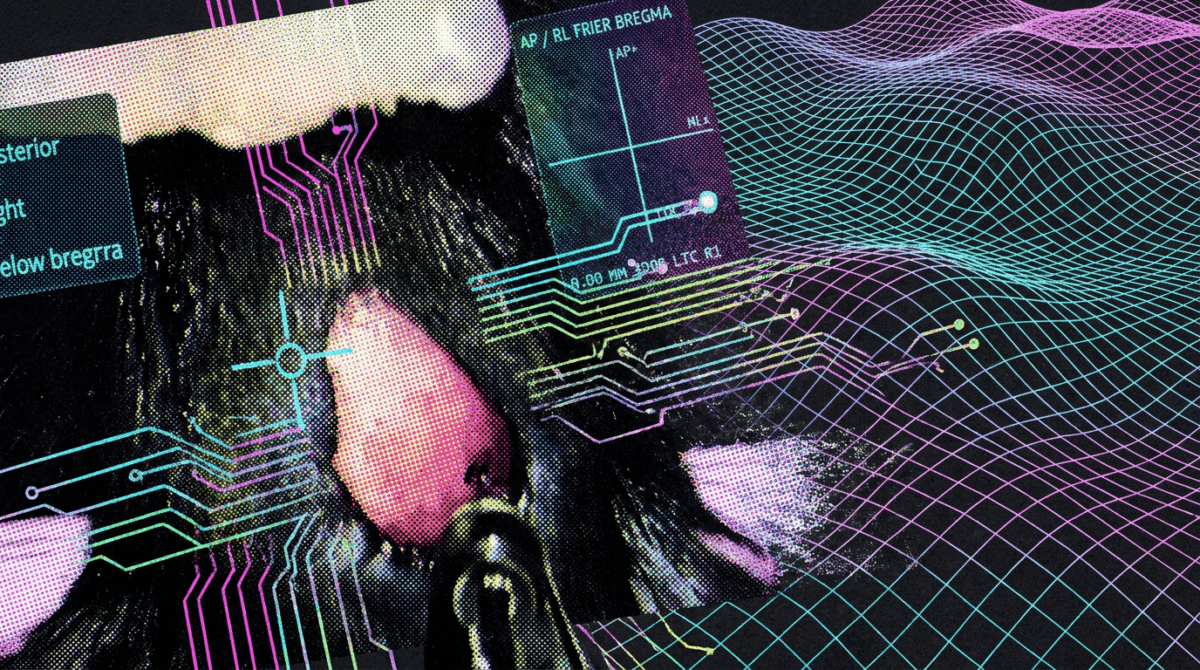
An AI agent performed brain surgery on an epileptic mouse, picking the drug, the brain target, and the injection coordinates on its own. According to lead researcher Ocana-Santero, it's the first time an AI agent has autonomously chosen a treatment and delivered it to a living mammal.

Read at the-decoder.com The opening of the original, or for stories before 30 October 2026 an AI model's summary of it. Check the original before you rely on a detail.

Tools in this story

Each tool opens in the Heidelberg AI Curriculum: what it does, what it costs, how to start.

Related stories

All stories

ArticleThe Decoder

Open-weight model GLM 5.3 built full Firefox exploit chains with zero human input in under 48 hours

Researchers at Epoch AI report that the open-weight Chinese model GLM 5.3 autonomously built full Firefox exploit chains with no human input, exploiting the 'patch gap' between when security fixes appear in code and when they reach users. The model identified disguised security fixes, chained vulnerabilities with a previously unpublished flaw to bypass browser sandbox protections, and could read local files when a user visited a webpage. Attacks cost about $1,000 in API fees per Firefox version across six versions released Sept 17–Oct 26, taking 12 hours for the fastest and up to 48 hours. No API providers tested triggered safety guardrails. Mozilla patched the flaw in Firefox 159.0 (Oct 27). The same setup spent roughly $100,000 on Google Chrome without producing an equivalent exploit. Researchers warn the patch-gap risk spans the software industry and note untested benchmark data suggesting Kimi K3.1 Pro could outperform GLM 5.3 on offensive cyber tasks.

ArticleLatent Space

[AINews] Building AIE CODE: The top Coding Agent Conference

AINews covers three AI developments: Mistral Large 4 ('Le Chonk') shipped as an open-weights release built for agentic coding and cybersecurity, with 1.05T total and 52B active parameters, 1M context, text+image input, and pricing near $0.70/$2.10 per 1M input/output tokens; OpenAI now monitors all frontier RL runs, evaluations, and internal Codex use using activation probes, reviewer models over reasoning and tool use, and investigator agents; and Anthropic says Claude now produces a preliminary misuse assessment immediately after each response, which it says has surfaced misuse its classifiers were not designed to catch.