Heidelberg AI News

Video · Tech With Tim ·

I Tested the Cheapest Coding Model on 7 Real Builds

In short

The video tests MiniMax M3.1 Flash on seven coding projects plus a larger Figma clone, using iterative agent runs capped at $1 per project and $10 for the final build. It demonstrates that the model can produce surprisingly capable apps quickly and cheaply, making it a practical option for AI-assisted coding when frontier-model costs matter.

Key points

  • MiniMax M3.1 Flash costs $0.15 per million input tokens and $0.60 per million output tokens, versus Claude Opus at $4 and $20.
  • The model ran at roughly 195 to 222 tokens per second and supports a 1-million-token context window.
  • Seven $1 builds included Neon Dash, a Chrome summarizer extension, data analysis, a Kahoot clone, an existing-app upgrade, a web operating system, and Blockcraft.
  • The model built a collaborative Figma-style app called Canvas for $3.52 after six build-and-revision sessions.
  • The complete experiment cost $10.60, compared with an estimated $215 for the same token usage with Opus 5.5.
  • The video concludes that M3.1 Flash offers strong agentic coding performance at a fraction of frontier-model costs.

Written by an AI model from the video’s captions and description.

So I wanted to see what all the hype was about. In this video, we put MiniMax M3.1 Flash to the test, explore its coding capabilities, and see what it can actually build.

Watch on YouTube The opening of the article at youtube.com.

More from Tech With Tim

All stories

VideoTech With Tim

Python Voice Agent Tutorial: Clone Your Voice & Talk to AI

The video demonstrates a Python voice agent that records speech, transcribes it, sends it to an LLM, and speaks the response using a cloned voice. It uses AssemblyAI and under 100 lines of code, showing a simple foundation for conversational agents such as receptionists or callers.

VideoTech With Tim

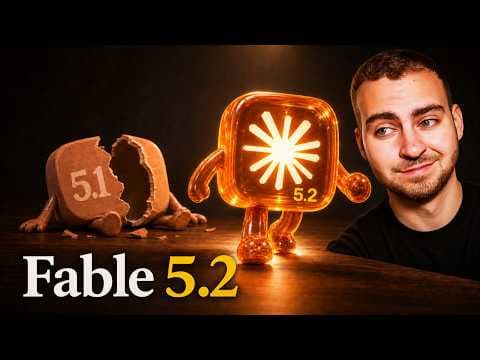
Claude Fable 5.2 is INSANE

The video tests Claude Fable 5.2 by giving it one prompt and letting it independently build three apps overnight: a WebGL2 game, a programming language with an IDE, and a multiplayer whiteboard. The experiment shows impressive autonomous coding capacity, but also rapid usage consumption and potentially high costs for larger projects.

VideoTech With Tim

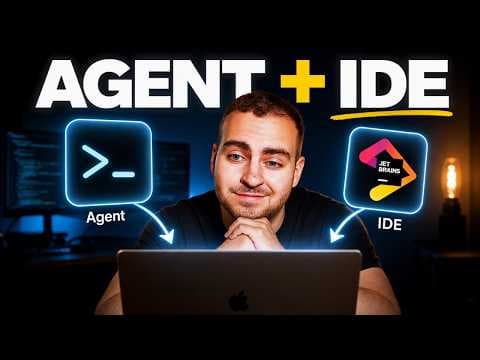
I Gave My AI Agent My IDE. Here's What Changed.

The video tests AI agents with and without IDE tools, showing that IDEs provide deterministic code understanding, faster feedback, and scalable refactoring on large codebases. It argues that IDEs now serve as both an agent toolbox and a human review desk for professional development.

VideoTech With Tim

Learn 99% of Codex in One Video

The video is a practical walkthrough of OpenAI Codex, covering setup, model selection, permissions, project organization, and advanced agent features. It matters because these workflows help AI builders move from ad hoc prompts to structured development, testing, deployment, and automation.