Heidelberg AI News

Video · NeuralNine ·

Mistral Just Released the Best Forecasting Model (Timestral)

In short

The video evaluates Timestral, Mistral’s open-source foundation model for probabilistic, multivariate time-series forecasting, using Python and energy-demand datasets. It outperforms the tested alternatives, especially when using temperature as a covariate, while smaller versions offer faster local inference and browser or smartphone deployment.

Key points

  • Timestral comes in 5M, 28M, 70M, and 209M-parameter versions.
  • The model predicts probability distributions with 21 quantiles rather than single values.
  • On one dataset, the 209M model achieved a mean absolute error of 3.192 versus Kronos 2 at 3.299.
  • On the covariate dataset, Timestral reached an error of 59.8 with temperature versus Kronos 2 at 90.1.
  • The 5M model ran locally in 0.83 seconds with an error of 3.318.
  • The 28M model outperformed Kronos 2 on one test while remaining faster than the largest model.
  • The 5M and 28M models can run locally in a browser, including on smartphones, through ONNX conversion.

Written by an AI model from the video’s captions and description.

Watch on YouTube The opening of the article at youtube.com.

In this story

A tool or model opens in the Heidelberg AI Curriculum: what it does, what it costs, how to start. A repo opens on GitHub.

Related stories

All stories

ArticleLatent Space

[AINews] Building AIE CODE: The top Coding Agent Conference

AINews covers three AI developments: Mistral Large 4 ('Le Chonk') shipped as an open-weights release built for agentic coding and cybersecurity, with 1.05T total and 52B active parameters, 1M context, text+image input, and pricing near $0.70/$2.10 per 1M input/output tokens; OpenAI now monitors all frontier RL runs, evaluations, and internal Codex use using activation probes, reviewer models over reasoning and tool use, and investigator agents; and Anthropic says Claude now produces a preliminary misuse assessment immediately after each response, which it says has surfaced misuse its classifiers were not designed to catch.

VideoNeuralNine

Every Way To Run Local AI Models

The video maps the local LLM ecosystem, explaining how inference engines, compute libraries, and convenience wrappers relate across consumer hardware and small deployments. It compares setup, performance, and use cases so AI builders can choose between tools such as llama.cpp, vLLM, Ollama, SGLang, and TensorRT-LLM.

VideoNeuralNine

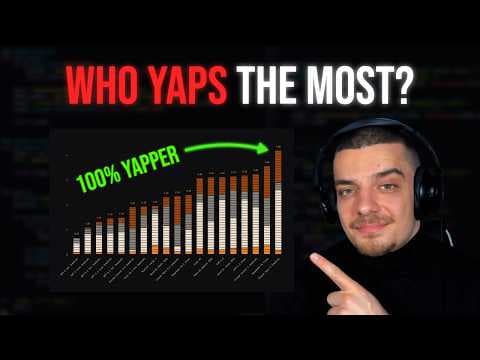
I Got Tired of AI Yapping, So I Measured It

The video introduces Neural Yap, a benchmark that measures how much AI models overuse stock phrases, excessive length, typography, and formatting. Its early results favor GPT models over Claude, DeepSeek, and Mistral for concision, while showing that the surrounding harness and system instructions can matter more than the model itself.