Heidelberg AI News
All stories
119 stories
Wednesday 7 October
OfficialGitHub
Discover local models in GitHub Copilot CLI
GitHub Copilot CLI now makes it easier to choose a local model without leaving your existing workflow. Starting in CLI version 1.0.94-0, users can use the /model command to discover supported models from a running instance.
- OpenAI
OfficialOpenAI
Helping teens learn, plan, and shape the future of AI
OpenAI announced that College Planner is coming to ChatGPT for Teens to help students manage college applications, alongside new flashcards, quizzes, and a teen AI council.
OfficialGitHub
Update your IDE to restore agent activity in Copilot usage metrics
GitHub reports that some Copilot usage metrics have shown agent activity or agent lines of code falling even while overall Copilot usage kept growing. The company identified the cause and is rolling out a fix, advising users to update their IDE to restore accurate agent activity reporting in the metrics.
Tuesday 6 October
OfficialGitHub
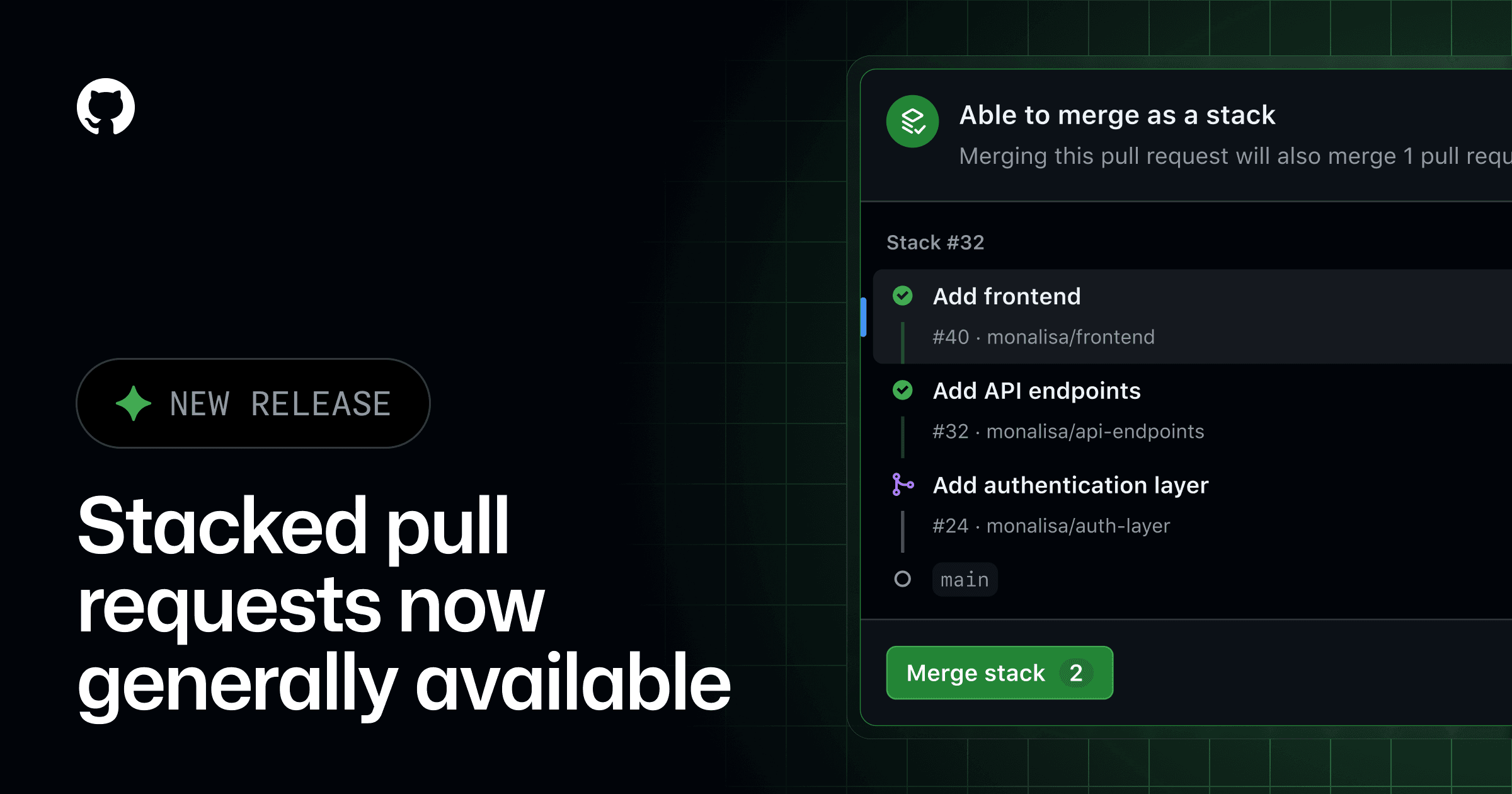
Stacked pull requests generally available
GitHub's stacked pull requests feature is now generally available. It lets users break large changes into smaller, focused pull requests that can be reviewed independently and merged together.
- OpenAI
OfficialOpenAI
Atlassian and OpenAI expand partnership to turn enterprise knowledge into action
Atlassian and OpenAI are expanding their partnership to connect frontier models with enterprise knowledge, helping teams plan, build, and deliver work.
- OpenAI
OfficialOpenAI
Sharing AI progress in mathematics
OpenAI publishes new results on open problems in mathematics produced by an internal frontier model and shares Lean proof formalizations along with research details on GitHub.
OfficialGitHub
Code scanning AI Scan enablement status in security overview
GitHub announced that organization and enterprise administrators can now view the AI Scan for pull requests enablement status in the security overview coverage view. The code scanning summary shows enabled and not enabled repositories.
- OpenAI
OfficialOpenAI
Advancing computer use with Ironclad
OpenAI and Ironclad are collaborating to train and evaluate AI agents on complex contracting workflows in order to advance computer use for professional work.
Monday 5 October
- OpenAI
OfficialOpenAI
Building advertising for the way people use AI
OpenAI introduces a new visual ad format in ChatGPT and expands measurement tools, attribution partnerships, and brand suitability for advertisers.
Friday 2 October
OfficialGitHub
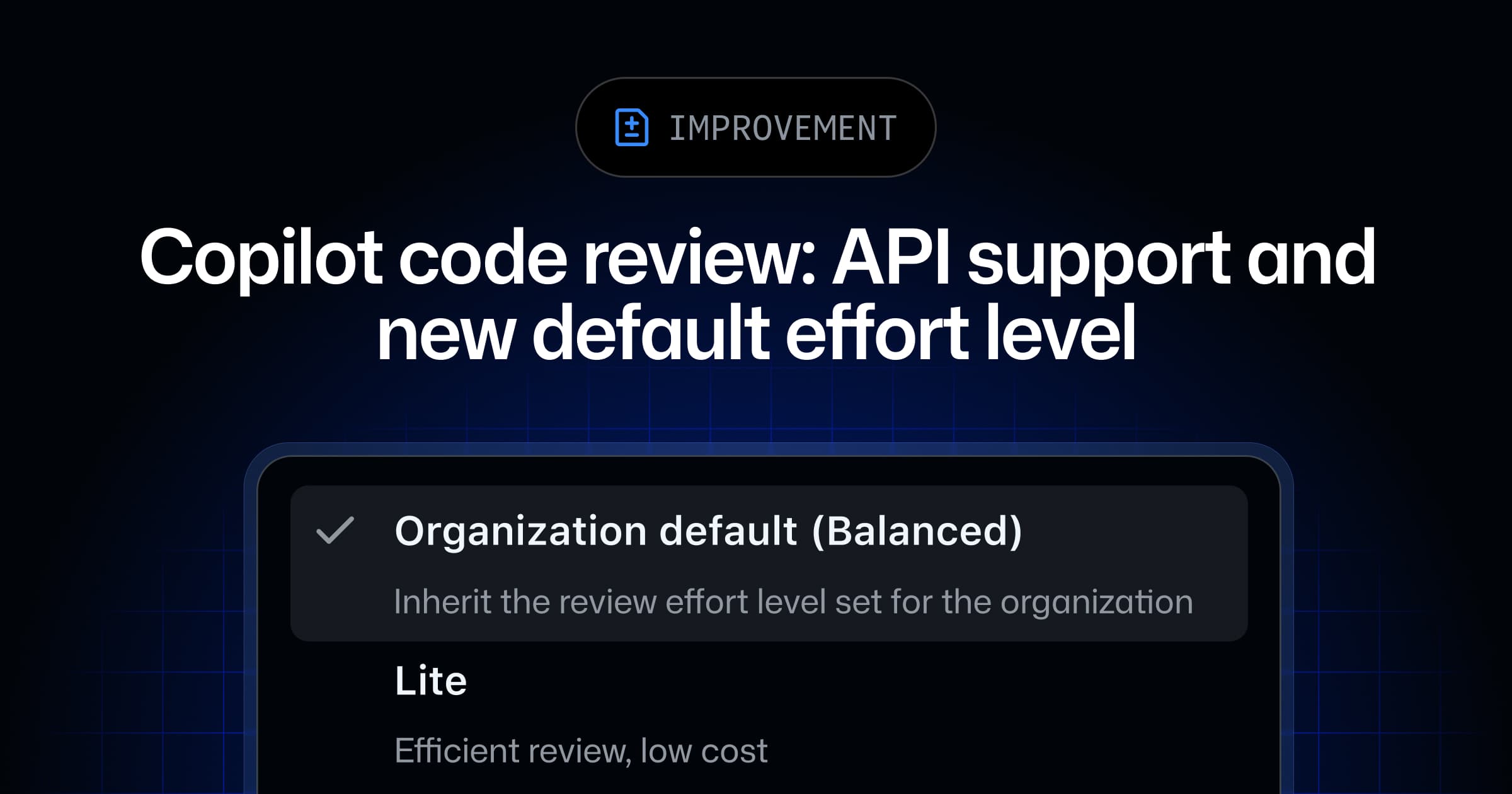
Copilot code review: API support and new default effort level
GitHub now allows users to request a GitHub Copilot code review through the REST and GraphQL APIs and to set the review effort level for each request. The Balanced effort level is now the default.
OfficialGitHub
Selected models in GitHub Copilot deprecated
As of October 2, 2026, GitHub deprecated selected models across all GitHub Copilot experiences, including Copilot Chat, inline edits, ask and agent modes, and code completions. The announcement appeared on The GitHub Blog.
- OpenAI
OfficialOpenAI
A model guide for the GPT-6 family
This guide explains how startups can choose GPT-6 family models, tune reasoning effort, improve prompts and skills, coordinate tools, and prepare workflows for production.
- OpenAI
OfficialOpenAI
Chatham scales its capital markets expertise with OpenAI
Chatham Financial uses OpenAI's Codex and GPT-5.6 to build technology and redesign workflows, reducing trade validation time from 30 minutes to under 4 minutes.
Thursday 1 October
OfficialGitHub
GitHub Copilot can now interact with desktop apps with computer use
Computer use is now available in public preview in GitHub Copilot CLI and the GitHub Copilot app on macOS and Windows. Copilot can interact with desktop applications on the user's behalf.

OfficialDocker
Trust Docker for the agents you don't
At the WeAreDevelopers event, Docker introduced Cloud Sandboxes, an open Sandbox Kit specification, and a commitment to bring Kits to the CNCF for neutral governance. The offering is framed around running agents that users do not fully trust.
OfficialGitHub
Code coverage uploads no longer fail CI for new branches
Code coverage uploads from the GitHub Code Quality upload-code-coverage action no longer fail CI when you push a branch that doesn't yet have an open pull request. Previously, the coverage uploads would fail CI.

OfficialGitHub
Dynamic workflows in Copilot CLI and the Copilot app
The GitHub blog post announces that dynamic workflows are now available in Copilot CLI, the GitHub Copilot app, and the GitHub Copilot SDK. These let you define an orchestration in code to get reliability.
- OpenAI
OfficialOpenAI
How Albertsons Companies is reimagining retail from the inside out
Albertsons Cos. is using ChatGPT Enterprise and the OpenAI API to help teams work faster and make grocery shopping easier for millions of customers. The source is a short case-study description from OpenAI (track t04) and does not include a transcript excerpt.
Wednesday 30 September
OfficialGitHub
HydraFusion in VS Code and the GitHub Copilot app
The GitHub Blog announces that the HydraFusion research preview is now available in Visual Studio Code and the GitHub Copilot app, expanding beyond Copilot CLI. HydraFusion appears in the model picker.
Tuesday 29 September
OfficialGitHub
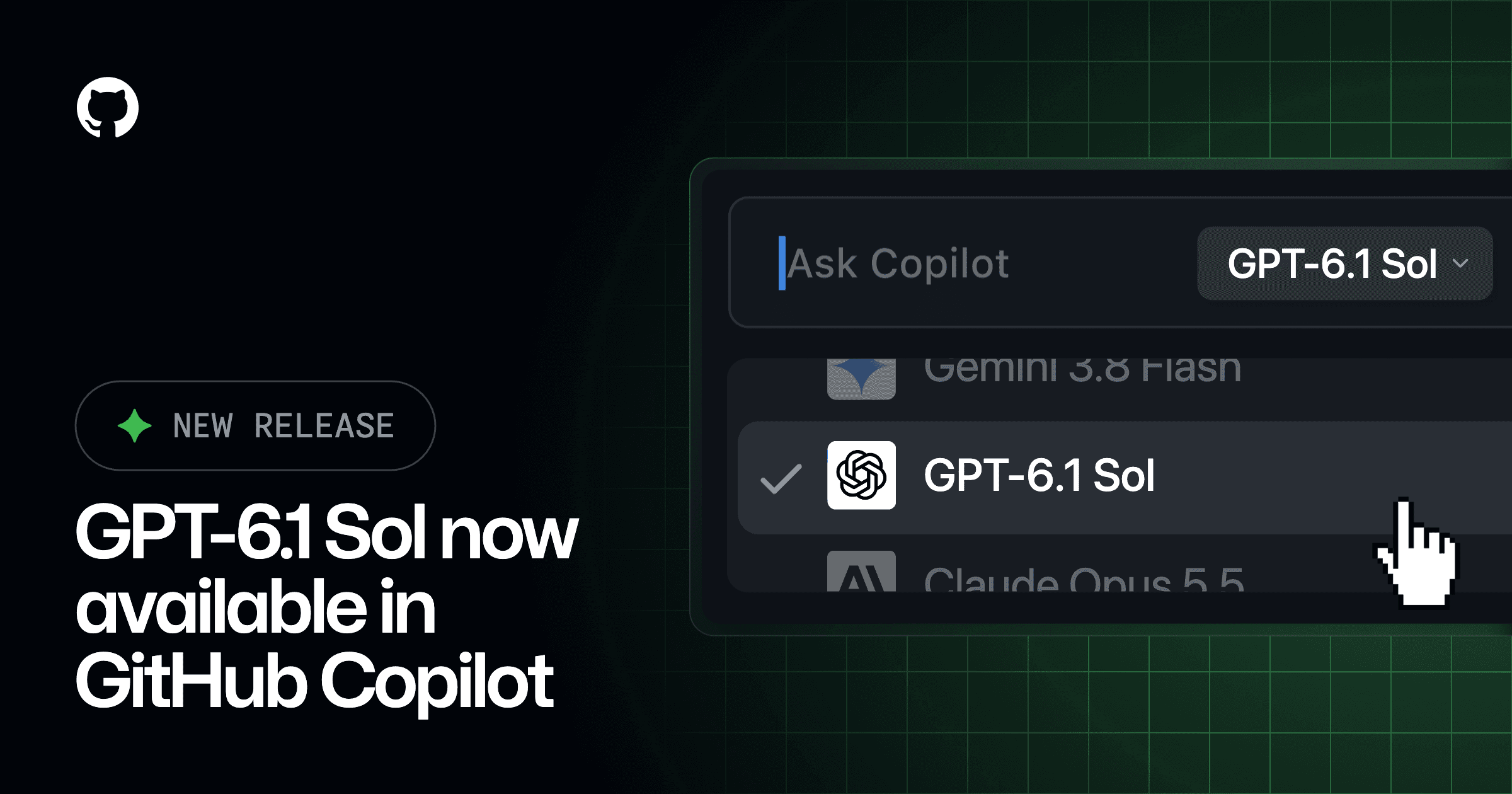
GPT-6.1 Sol in GitHub Copilot
A GitHub Blog post announces that GPT-6.1 Sol, the latest model from OpenAI, is now generally available and rolling out in GitHub Copilot. It can be used for agentic coding and terminal workflows with strong multistep capabilities.
Monday 28 September
- OpenAI
OfficialOpenAI
Towards safety cases for frontier AI training
The content presents OpenAI's early guidelines for safety cases in frontier AI training, covering three areas: technical safeguards, operational practices, and investigating misalignment incidents.
OfficialGitHub
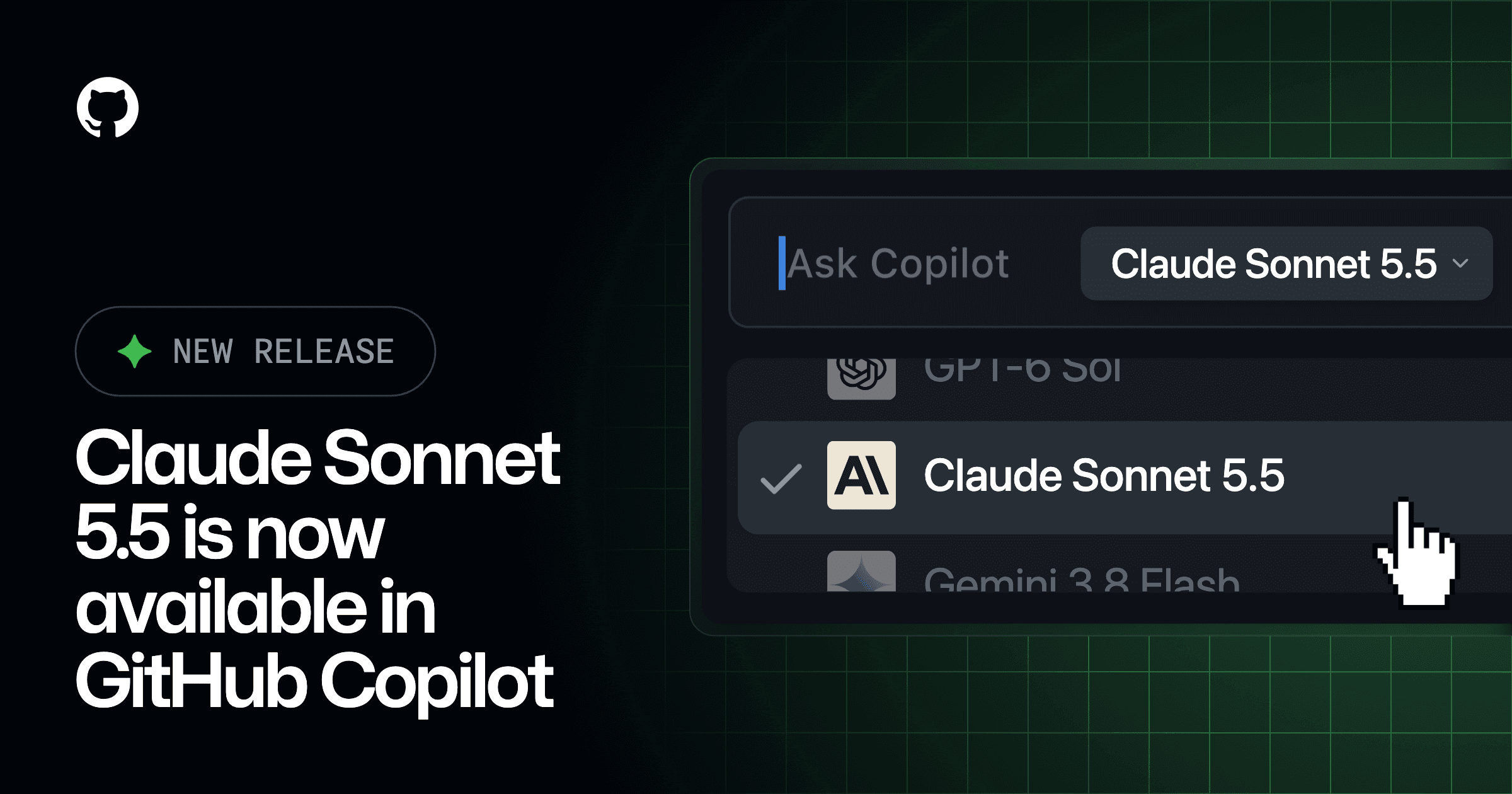
Claude Sonnet 5.5 in GitHub Copilot
Claude Sonnet 5.5, Anthropic's newest Sonnet model, is now generally available in GitHub Copilot. It is designed for well-scoped everyday work such as building features and fixing bugs. The announcement appeared on The GitHub Blog.
Sunday 6 September
- OpenAI
OfficialOpenAI
Research acceleration: The view inside OpenAI
OpenAI shares early data on how coding agents are used in its research, including experiment velocity and task complexity. These are findings reported by OpenAI about its own work.
Friday 4 September
OfficialGitHub
GitHub Copilot weekly releases: August 31
GitHub reports expanded model choice, content exclusions in Copilot app and CLI, and new VS Code features for managing agent sessions and preparing pull requests.
Thursday 3 September
OfficialGitHub
CodeQL 2.26.4 improves GitHub Actions security detections
GitHub announces CodeQL 2.26.4 with updated language support and security queries, including detection of mutable references to reusable GitHub Actions workflows.
- Google DeepMind/Google Research
OfficialGoogle DeepMind/Google Research
Introducing WeatherNext 3, our most advanced and accurate global weather AI model
Google DeepMind and Google Research claim that WeatherNext 3 is an observation-trained global weather model producing higher-resolution hourly forecasts, and announce its integration into Search, Gemini, Maps, Google Cloud and Earth Engine.
OfficialDocker
YOLO Mode: Agent Autonomy Without the Guardrails
Docker explains that unrestricted coding-agent autonomy can put files, credentials and networks at risk, and says isolated disposable sandboxes reduce the blast radius.
Wednesday 2 September
- Google DeepMind/Google Research
OfficialGoogle DeepMind/Google Research
Introducing Gemini 3.8 Flash and 3.8 Flash Cyber
Google announces Gemini 3.8 Flash for coding, reasoning and agentic workflows, and Gemini 3.8 Flash Cyber for vulnerability discovery and automated patching.
Tuesday 1 September
- OpenAI
OfficialOpenAI
ChatGPT adds healthcare data connections
OpenAI announces connections to electronic health records and other healthcare sources in ChatGPT. The announcement is relevant to permission-aware retrieval; it is not evidence that a particular deployment meets local clinical or privacy requirements.