Video · Matthew Berman ·

AI Is Recreating Photoshop and Other Adobe Apps
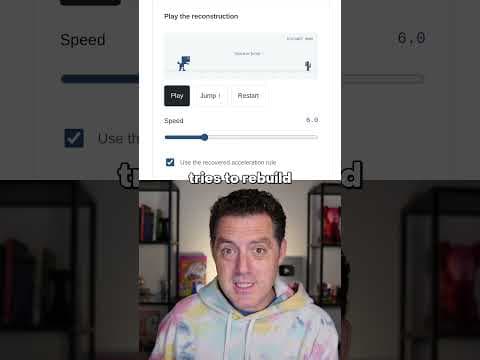
A creator video explains that AI is now being used to recreate commercial software such as Adobe's Photoshop and Premiere pixel by pixel without developers ever seeing the underlying code. The process works by having AI look at a feature, attempt to rebuild it from appearance alone, compare the result against the original, and iterate until it is pixel perfect; this is called reverse engineering. An open source project called 'reverse engineer anything' is reportedly trending on GitHub and documents how to do it. The creator frames this as potentially ending the need to pay for software, envisioning software built specifically for an individual's needs by taking an existing app, keeping only the features required, and adding new ones.

Watch on YouTube Summary written by an AI model from the original. Check the original before you rely on a detail.

More from Matthew Berman

All stories

VideoMatthew Berman

Two AI bots for spam calls and data privacy

Matthew Berman recommends two AI bots for privacy. One bot (referred to in the transcript as a 'Grokbot') automatically submits a phone number to do-not-call registries. The other, Privacy Scrubber, scans the web daily for personal information that may have leaked to data brokers and requests its removal.

VideoMatthew Berman

Google "Carbon" just won everything...

Google announced Gemini 4 Carbon, its newest frontier model, claiming state-of-the-art cybersecurity and long-horizon capabilities. It ranks number one on Artificial Analysis's newly released index V5, scoring 59, above the previous best model, Claude Opus 5.5. The model is not yet publicly released; Google will first give it to cybersecurity partners and participate in a US government pre-release testing process before general availability. Google cites gains in coding, agentic tasks, and cybersecurity benchmarks (SEC bench pro, exploit gym, CWE patching). Introductory pricing is $2 per million input and $10 per million output tokens, rising to $4 and $20 after the introductory period, with 95% off cached input tokens. The model follows Gemini 4 Argon, launched two weeks earlier.

VideoMatthew Berman

Who is local AI really for?

Matthew Berman argues that local AI 'makes no sense' for the average person right now, claiming it is expensive, hard to set up, and inferior to frontier models like ChatGPT and Claude. He distinguishes local AI—running a model on your own device so it works offline—from open-source/open-weights AI, where labs release models freely and companies such as AWS, Google, and the neoclouds serve them from data centers. He notes the best open-weights models sit a generation behind the frontier and are too large to run on consumer or even professional hardware without racks of GPUs costing hundreds of thousands to millions of dollars. He explains why he wants local AI to succeed: data sovereignty, protection from AI labs cutting off access (citing Anthropic restricting Claude use with OpenClaude), and—especially for enterprises—these same benefits. He promises to walk through the math on whether local AI makes financial sense today and to sketch a future vision for it.

VideoMatthew Berman

Sam Altman on Why AI Needs a New Kind of Hardware

Sam Altman argues that AI is a technology that wants a new form factor. He describes laptops and iPhones as among the greatest inventions in the history of technology, but says AI is constrained by devices designed for a person rather than for AI. He finds it wasteful for a computer to spend energy rendering a user interface meant for a person to look at when AI could instead receive the data directly.