Heidelberg AI News
Videos
14 stories from Matthew Berman
Thursday 29 October
VideoMatthew Berman
Two AI bots for spam calls and data privacy
Matthew Berman recommends two AI bots for privacy. One bot (referred to in the transcript as a 'Grokbot') automatically submits a phone number to do-not-call registries. The other, Privacy Scrubber, scans the web daily for personal information that may have leaked to data brokers and requests its removal.

VideoMatthew Berman
Google "Carbon" just won everything...
Google announced Gemini 4 Carbon, its newest frontier model, claiming state-of-the-art cybersecurity and long-horizon capabilities. It ranks number one on Artificial Analysis's newly released index V5, scoring 59, above the previous best model, Claude Opus 5.5. The model is not yet publicly released; Google will first give it to cybersecurity partners and participate in a US government pre-release testing process before general availability. Google cites gains in coding, agentic tasks, and cybersecurity benchmarks (SEC bench pro, exploit gym, CWE patching). Introductory pricing is $2 per million input and $10 per million output tokens, rising to $4 and $20 after the introductory period, with 95% off cached input tokens. The model follows Gemini 4 Argon, launched two weeks earlier.
Friday 23 October
VideoMatthew Berman
Who is local AI really for?
Matthew Berman argues that local AI 'makes no sense' for the average person right now, claiming it is expensive, hard to set up, and inferior to frontier models like ChatGPT and Claude. He distinguishes local AI—running a model on your own device so it works offline—from open-source/open-weights AI, where labs release models freely and companies such as AWS, Google, and the neoclouds serve them from data centers. He notes the best open-weights models sit a generation behind the frontier and are too large to run on consumer or even professional hardware without racks of GPUs costing hundreds of thousands to millions of dollars. He explains why he wants local AI to succeed: data sovereignty, protection from AI labs cutting off access (citing Anthropic restricting Claude use with OpenClaude), and—especially for enterprises—these same benefits. He promises to walk through the math on whether local AI makes financial sense today and to sketch a future vision for it.
Wednesday 21 October
VideoMatthew Berman
Sam Altman on Why AI Needs a New Kind of Hardware
Sam Altman argues that AI is a technology that wants a new form factor. He describes laptops and iPhones as among the greatest inventions in the history of technology, but says AI is constrained by devices designed for a person rather than for AI. He finds it wasteful for a computer to spend energy rendering a user interface meant for a person to look at when AI could instead receive the data directly.
VideoMatthew Berman
Sam Altman on Why AI Hasn't Made Us Less Busy
In an interview, OpenAI CEO Sam Altman says everyone expected AI to go the other way and that there would not be enough to do, though he acknowledges that may happen someday. He notes that the outcome has been much less obvious than it seems on the surface, and that technology is supposed to enable people to work a little less and have more time for everything else. However, he observes that people seem good at wanting more out of life and the world and at making themselves busier, agreeing that this is just human nature.
VideoMatthew Berman
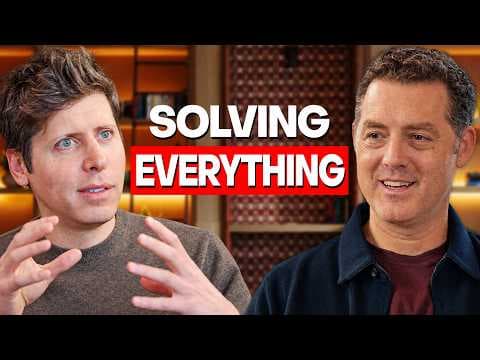
Sam Altman: RSI, AI Consciousness, OpenAI's New Hardware, Compute, and more!
In an interview with Matthew Berman, OpenAI CEO Sam Altman discusses the company's direction. He says AI is entering an era where it will help discover significant new knowledge, extending what has worked in math to biology, medicine, material science, and energy, and he hopes to have a candidate for curing or treating a major disease within the next couple of years, subject to FDA testing. He is personally excited about a potential major physics discovery. On coding, he argues coders will not lose jobs but the texture of the work changed, and the world had more demand for software than expected. He addresses AI consciousness, noting no one really knows whether current models are conscious and expressing worry about the framing and about pushing recursive self-improvement. He says ChatGPT is too agreeable. He discusses OpenAI's bet on chips and cheaper compute, describing AI as wanting a new form factor and a new kind of computer, and he reflects on the pressure of leading OpenAI, saying society should aim for a new renaissance rather than a new industrial revolution.
Wednesday 14 October
VideoMatthew Berman
Google just went FRONTIER (Gemini 4 Argon)
Matthew Berman reports that Google's Gemini 4 Argon is now live and calls it a frontier model, saying Google has 'caught up.' He built several 3D projects with it—a hyperrealistic cyberpunk 3JS city running at 60fps, a fully controllable Rube Goldberg physics simulation, and a Fall Guys game clone—often from very simple prompts. He notes Argon tends to spend around 30 minutes on a task and is a good model but not as strong at 3D as Astra and Claude Opus. He also covers Meta's Muse Wonder, released the day before, which he describes as a frontier model that is not good at 3D; Alexander Wang, Meta's head of AI, reportedly said the team either forgot or didn't reinforce the model for 3D work.
Tuesday 13 October
VideoMatthew Berman
OpenAI Employee Arrested Over Recording Device
Matthew Berman reports that an OpenAI employee was arrested by the FBI for planting a sophisticated recording device in OpenAI's offices. OpenAI discovered the device and used its own AI models to determine where the device was manufactured and to triangulate the employee's location. OpenAI said it is working with the FBI and that, as of the time of the report, no models, weights, or research had been exfiltrated.
Monday 12 October

VideoMatthew Berman
I'm Rebuilding Super Mario World With AI
Matthew Berman attended OpenAI's dev day, where he received mod retros (recreated Game Boy devices). He tasked an OpenAI GPT model (transcribed as 'GPT 6.1 Soul') with recreating Super Mario World from scratch for the Mod Retro. The AI has been working for over four days, iterating by writing code and checking it against the game's expected appearance, and may finish in a few more days.
Saturday 10 October

VideoMatthew Berman
AI Is Recreating Photoshop and Other Adobe Apps
A creator video explains that AI is now being used to recreate commercial software such as Adobe's Photoshop and Premiere pixel by pixel without developers ever seeing the underlying code. The process works by having AI look at a feature, attempt to rebuild it from appearance alone, compare the result against the original, and iterate until it is pixel perfect; this is called reverse engineering. An open source project called 'reverse engineer anything' is reportedly trending on GitHub and documents how to do it. The creator frames this as potentially ending the need to pay for software, envisioning software built specifically for an individual's needs by taking an existing app, keeping only the features required, and adding new ones.
Thursday 8 October
VideoMatthew Berman
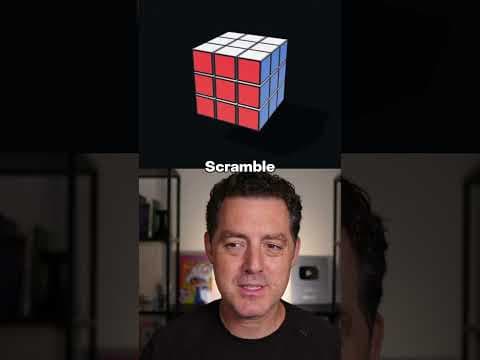
Mistral Large 4 Failed My Rubik's Cube Test
In a video, Matthew Berman tested Mistral Large 4 by having it build a Rubik's cube simulation. In the first version, pressing scramble did nothing; after iterating, the cube's sides spun correctly but the colors disappeared. Berman said he did not blame the model itself.
Wednesday 7 October
VideoMatthew Berman
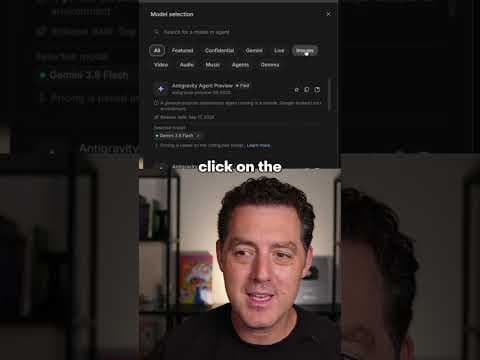
How to Find Nano Banana 2.1 in Google AI Studio
Matthew Berman explains how to locate and use Nano Banana 2.1, a paid image-generation model, in Google AI Studio. He opens the playground's model selector, clicks the 'images' pill, and selects Nano Banana 2.1. He then generates a hyperrealistic close-up image of a woman, praising the detail in facial textures, wrinkles around the eyes, hair, and jacket fibers.
Thursday 1 October
VideoMatthew Berman
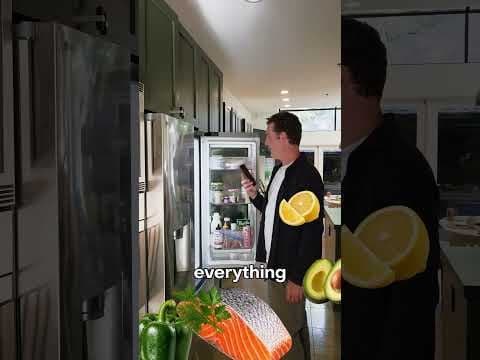
Muse from Meta Can Work Through Your To-Do List
A sponsored video by Matthew Berman demonstrates Muse, a new app from Meta. The presenter texts Muse like a friend and asks it to perform real tasks: creating a personalized birthday card based on what a person loves, planning dinner around food preferences, budget, and what is in the fridge, building a grocery list, and ordering groceries (with approval before the order goes out). It can negotiate a refund by giving order details and explaining the problem, then asking permission before contacting support. Muse can also manage a to-do list, find unused subscriptions for the user to review and cancel, and accept tasks added from a phone while out. The presenter notes users can name Muse, give it a look and shape its personality, that it remembers preferences, and that users choose what it can access. The Muse app can be downloaded from ai.meta.com/muse/download/.
Wednesday 30 September
VideoMatthew Berman
OpenAI COOKED
A recap of OpenAI Dev Day 2026 by Matthew Berman covering several announcements. DOTS is OpenAI's always-on personal AI assistant competing with Grok, Muse, and Instinct and inspired by OpenClaw; it lives within ChatGPT, controls ChatGPT and Codex threads, connects to personal accounts (Gmail, Google Docs, Calendar), and its conversations don't count toward usage unless they control threads. Ultrafast is GPT-6 Astra powered by Cerebras chips, running eight times faster but at six times the cost; a new Pro 500 plan ($500/month) offers 25x usage limits. GPT-6.1 is described as affordable, fast, and near GPT-6 Astra quality at a fraction of the price ($2 per million input, $10 per million output). Codex updates include Codex in the Cloud, a refreshed Codex CLI with voice control, Codex code review, a Decisions API, a plugins relaunch, 'Sign in with ChatGPT + bring your tokens,' and ChatGPT Space Links.