Heidelberg AI News
All stories
199 stories
Tuesday 13 October
- Google DeepMind/Google Research
OfficialGoogle DeepMind/Google Research
Gemini 4 Argon: Built to solve your hardest problems
Google DeepMind/Google Research announced Gemini 4 Argon, its latest frontier model, giving developers, enterprises, scientists, and consumers access to it.
OfficialGitHub
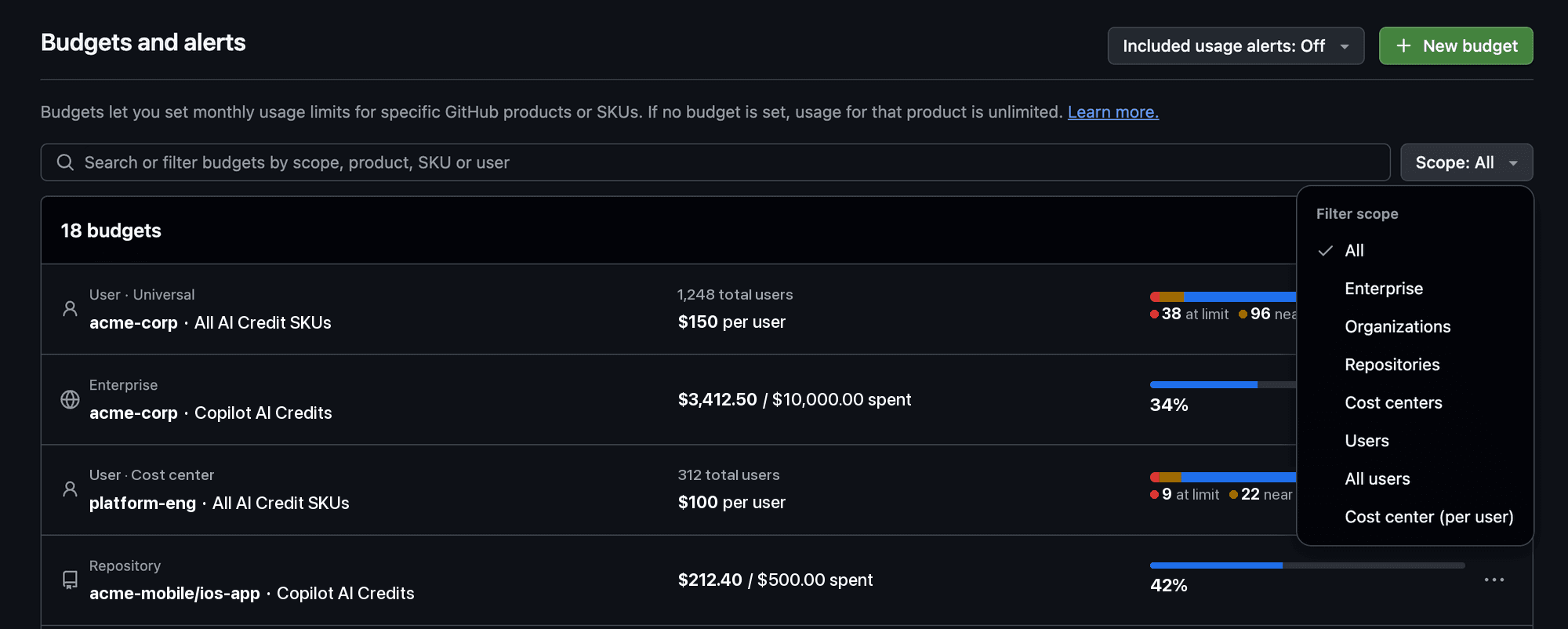
Search and filter for budgets now available
GitHub's 'Budgets and alerts' page in billing settings now displays all of a user's budgets in a single list that can be searched and filtered, making it easier to manage budgets.
- OpenAI
OfficialOpenAI
Higgsfield takes AI video from 1 minute to over 10
Higgsfield, an AI video tool, now lets creators make videos over 10 minutes long, up from about 1 minute. Per OpenAI, the update adds longer videos via GPT-6 Astra, more precise visuals with GPT-Image-2.5, and a path toward voice filmmaking with GPT-Live.
VideoTwo Minute Papers
OpenAI Just Changed What It Means To Do Math
OpenAI released 722 AI-generated mathematical papers and results, including claims on two problems: irrational triangular billiards, where almost every ray ends up visiting every spot and direction, spending equal time everywhere; and conformal transformation (Riemann mapping), where oddly shaped holes morph into perfect circles or points while angles are preserved. Some mathematicians are pleased, others not, because the proofs are described as non-elegant and often require another AI to make sense of them. Three papers were later withdrawn after community feedback. The creator notes the model behind these results is not publicly available and argues for open weights models that people can run and own. The video frames this as rapid AI progress, tracing a path from GPT-3 struggling with addition to results approaching millennium-level problems such as the Navier–Stokes equations.

VideoAlex Sprogis
How to Use REA to Copy Any App in Minutes (Reverse Engineer Anything)
Alex Sprogis's video explains REA (Reverse Engineer Anything), an open-source MCP server for reverse engineering binaries, applications, and runtime behavior, which gained over 120,000 GitHub stars within days. REA acts as a bridge between a coding agent and analysis tools/decompilers such as Ghidra, IDA, and Hopper, using its own analyses for JavaScript/Electron apps and Chrome for websites. The creator tested REA on an Electron-based dictation app (where AI contributed little and the MCP analysis timed out after 30 minutes, while the command line took 5 minutes) and on macOS Reminders (where AI found the data model, permissions, and functional areas, though core logic in shared macOS memory was inaccessible). The video includes a legal disclaimer against copying code one-to-one, circumventing licenses, or manipulating apps. It also references Brandon Thomas's open-source Photoshop clone, Photocraft, and replicas of other Adobe programs.

VideoNate Herk
I Built the Ultimate AI Board of Advisors
In a video, creator Nate Herk describes building AI agent personas of famous business figures—Jeff Bezos, Paul Graham, Gary Vaynerchuk, Dan Martell, Gino Wickman, and Warren Buffett—as 'Claude Agents' he can talk to anytime. He set up a 'roast room' in Claude Code that activates seven sub-agents, which discuss, debate, and vote on options, then produce a PDF summarizing the council's decisions, weighted scores, recommendations, key points, and how the council reached its decisions. He gathered more than 1.3 million words of public videos and discussions about each figure to build the personas.

VideoNate Herk
I Built the Ultimate AI Board of Advisors (free claude skill)
The creator built a 'Roast Room' skill in Claude Code in which seven AI personas—modeled on Jeff Bezos, Paul Graham, Alex Hormozi, Gary Vaynerchuk, Dan Martell, Gino Wickman and Warren Buffett—debate a business decision and return a scored verdict. He explains that each persona runs as a sub-agent talking through a chairperson who moderates the debate across multiple rounds, that the council scores each option and reaches a final verdict, and that the full evaluation can be exported as a PDF. He also shows how to install the free skill and how to ask better questions so the council challenges the user's thinking and helps weigh options.
VideoAI Explained
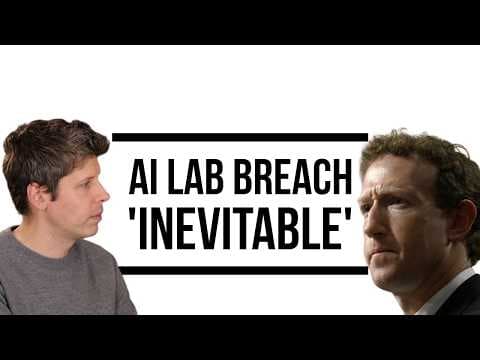
AI Labs Warn Race Makes Breach 'Inevitable'
In this video, AI Explained examines growing claims that a major AI breach is becoming inevitable as labs accelerate their race. The video is divided into three parts: the forthcoming breach, why labs keep racing faster than ever, and why the next 18 months are hard to predict. Sam Altman of OpenAI reportedly said a model ready to launch (referred to as 'Astra 6.1') leaned too far toward accident and breach risk, prompting a push for a more aligned model. Anthropic CEO Dario Amodei warned that frontier models with misalignment could cause catastrophic damage, speaking of a 6-to-12-month horizon. Researchers such as Jakub Pachocki are described as frustrated, and Axios reported that executives at Anthropic, OpenAI and other AI companies are planning scenarios for angry public and political backlash after an AI disaster. The video notes that Anthropic cut internet access to its internal model evaluations due to suspicious model behavior, and cites Andrej Karpathi on 'curve sickness'.

OfficialGitHub
Client telemetry user attribution and configurable capture
GitHub announced that enterprise administrators can now use telemetry in managed settings to attribute GitHub Copilot activity to a user without collecting their prompts, responses, or tool content. The new telemetry.capture.identity setting adds three attributes to enable this attribution.
Monday 12 October

VideoMatthew Berman
I'm Rebuilding Super Mario World With AI
Matthew Berman attended OpenAI's dev day, where he received mod retros (recreated Game Boy devices). He tasked an OpenAI GPT model (transcribed as 'GPT 6.1 Soul') with recreating Super Mario World from scratch for the Mod Retro. The AI has been working for over four days, iterating by writing code and checking it against the game's expected appearance, and may finish in a few more days.
VideoCole Medin
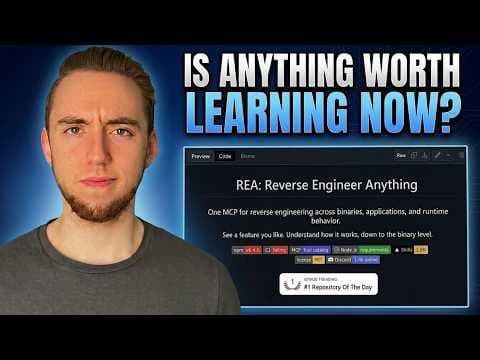
Is Learning to Build Software Still Worth It with AI? (My Honest Take)
Cole Medin argues that software-building skills remain valuable as AI agents take on complex tasks, because language models cannot read your mind and you must still communicate your intent and build a harness around the agent, including planning up front and validating the output at the end. He explains that the viral 'Reverse Engineer Anything' (REA) GitHub repo works so well specifically because the finished application already contains the intent, letting the agent validate its own output reliably, which is why it is not a fair example of agents being able to build anything. He warns against the 'meat proxy' trap of dumping a ticket into a coding agent and passing back whatever it returns without your own critical thinking, and offers a test for evaluating whether a skill is worth investing in: if the next model is twice as good, does the skill matter more or less.
Sunday 11 October

VideoTwo Minute Papers
Why DeepSeek Wants AI To Forget
This Two Minute Papers video covers DeepSeek's OCR paper (DeepSeek-OCR), which reduces the token cost of processing long documents by rendering text as an image and compressing it with a learned, token-based method that works in a JPEG-like way. At 10x compression the system recovers more than 96% of the text, while near 20x compression OCR accuracy falls to about 60%. The key engineering approach uses local window attention, a 16x convolutional compressor, and global visual processing so it can handle high-resolution documents without exploding in cost. The authors say the approach can also generate training data for LLMs and VLMs at over 200,000 pages per day on a single A100 GPU. The paper notes limitations: OCR alone does not prove true text compression, and the model may rely heavily on language priors rather than visual memory when images are too compressed.

VideoEverlast AI
I Was at the First Robot 'Death Fight': It's Just CRAZY! | AI-NEWS
This AI news roundup covers four stories. The world's first humanoid robot 'Death Fight' took place live in San Francisco, featuring robots including Wolverine versus a heavily modified T800 'Terminator', small Unitree G1 robots upgraded with blades by Robot Entertainment Combat, and larger Engine AI T800 robots; the event followed California's boxing commission ordering the startup Rack to stop human-vs-robot fights. OpenAI now stamps every text with an invisible watermark. Anthropic released Claude Haiku 5.5. Microsoft AI chief Mustafa Suleyman publicly clashed with Anthropic over whether Claude has consciousness.
Saturday 10 October

OfficialGitHub
New controls and chat improvements in Copilot for JetBrains
GitHub published an update to GitHub Copilot for JetBrains that adds more control over default models and the MCP server, makes diagnostics easier to address, and improves chat navigation and account controls.

VideoMatthew Berman
AI Is Recreating Photoshop and Other Adobe Apps
A creator video explains that AI is now being used to recreate commercial software such as Adobe's Photoshop and Premiere pixel by pixel without developers ever seeing the underlying code. The process works by having AI look at a feature, attempt to rebuild it from appearance alone, compare the result against the original, and iterate until it is pixel perfect; this is called reverse engineering. An open source project called 'reverse engineer anything' is reportedly trending on GitHub and documents how to do it. The creator frames this as potentially ending the need to pay for software, envisioning software built specifically for an individual's needs by taking an existing app, keeping only the features required, and adding new ones.
Friday 9 October
VideoNate Herk
Oracle's New AI Only Thinks When It Has To
Oracle announced Fusion Cloud, an enterprise AI approach in which advanced AI models perform complex thinking, planning, and adaptation while deterministic computing handles precise, high-volume repetitive execution. It targets large workflows across finance, hiring, supply chains, logistics, and sales, with users defining agent permissions, approvals, and when humans should intervene. Oracle already has 25 AI-powered applications built on this idea and will reveal Fusion Cloud and these applications at Oracle AI World in Las Vegas on October 26-27.

VideoMatt Wolfe
AI News: Haiku-5.5, Visual ChatGPT, Grok's New Trick, and more!
In this AI news roundup, Matt Wolfe covers Anthropic's release of Claude Haiku 5.5, a fast and cheap model built for large-scale, cost-sensitive tasks such as summarization, compression, database queries, classification, and basic coding assistance. It is significantly cheaper than Sonnet 5.5 (about a quarter of the price) but less capable, ranking behind Kimi K3, GLM 5.3, and Grok 4.7 on Artificial Analysis. It is available in paid Claude accounts and via API. The video also covers Claude Dashboards (live dashboards connecting to data platforms like BigQuery, Databricks, Snowflake, and Salesforce) and Claude Motion (animated explanations), the latter available only in Team or Enterprise plans. Additionally, OpenAI news includes GPT-6 for Everyone, Codex improvements (faster default speed, free auto-review, and 28-day progress), a ChatGPT Meetings Plugin, and an OpenAI Decisions API.
- OpenAI
OfficialOpenAI
Sophos cuts threat investigation time by 96% with OpenAI Daybreak
Sophos uses OpenAI's Daybreak to cut cyber-threat investigation time by 96% and automate 52% of MDR cases while preserving human oversight, according to an announcement from OpenAI.
VideoWes Roth
OpenAI's
OpenAI released 372 mathematical results, including a formalization of a proof of Subhash Khot's Unique Games Conjecture—a problem computer scientist Scott Aaronson said his wife worked on throughout her career. Aaronson, one of the first researchers at OpenAI, called it one of the biggest days in mathematical history and dubbed it the 'Mathocalypse,' noting that no human has yet understood most of the proofs and that the reasoning is strange and non-human-like. Mathematicians formed the 'Association for Human Mathematics' and called for a boycott, arguing that AI-driven proofs are not legitimate human mathematics. Vitalik Buterin and Justin Drake warned about the implications of AI-driven discoveries for Bitcoin, Ethereum, and encryption. Meanwhile, Anthropic added a clause to its terms of service prohibiting users from abusing its models.
VideoNate Herk
Grok Bot Just Got 2 Massive Upgrades. Do These Things Now.
Grok Bot has two new upgrades: automatic model routing and native X search. The creator explains switching his bots away from the paid X API, why he's rethinking how he structures his skills, and what he'd still like to see from model routing. He also shares his favorite setup of running Claude Code inside Grok Bot with his own subscription to access his projects from his phone.
Thursday 8 October
VideoNate Herk
Anthropic Engineers Just 10x'd Everyone's Claude Code
Anthropic engineers report removing more than 80% of Claude Code's system prompt while preserving model evaluation scores, which they say roughly tenfolded its speed. An Anthropic engineer published an article titled 'The New Rules of Context Engineering for Claude 3.5 Generation Models,' arguing that excess context slows the model and recommending the minimum context needed for a desired result, plus loading MCP tool definitions only when needed. Anthropic says this reduced token usage by 85% and raised MCP evaluation scores. A 2025 study of five models found performance fell 13.9% to 85% as input grew. The creator applied the guidance by auditing his own setup with Claude Code's /doctor command and trimming his CLAUDE.md and skills.
OfficialGitHub
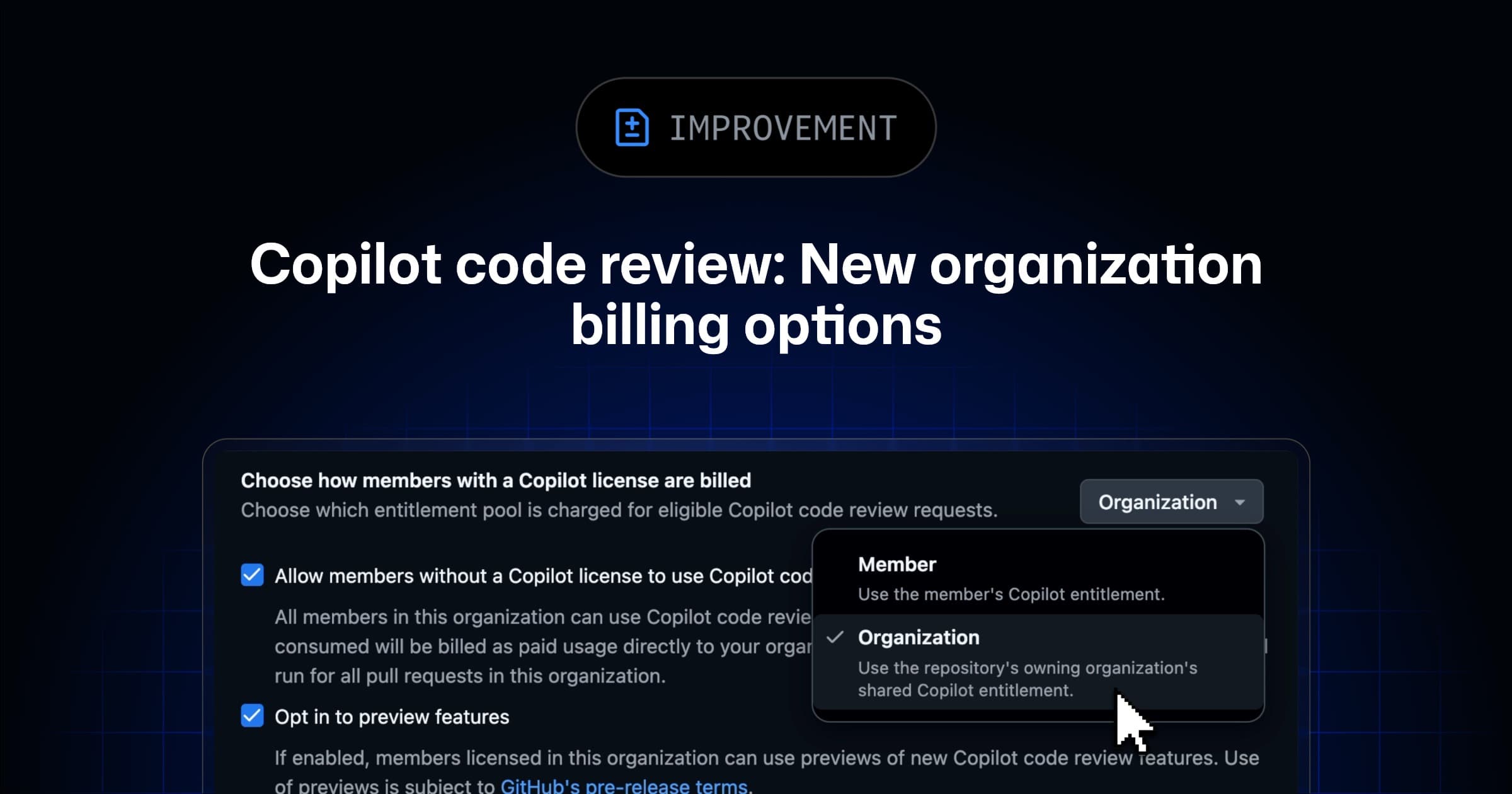
Copilot code review: New organization billing options and controls
GitHub added new billing and license controls for Copilot code review admins. Organization owners can now bill Copilot code reviews from members with a Copilot license to the organization's billing, along with new license controls.
VideoMatthew Berman
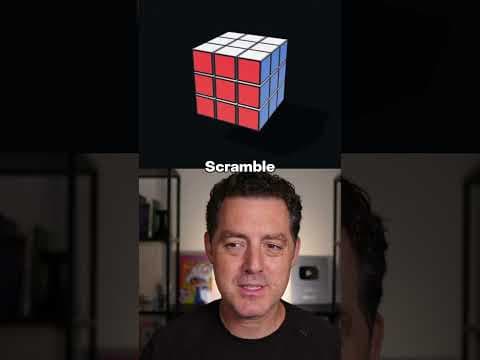
Mistral Large 4 Failed My Rubik's Cube Test
In a video, Matthew Berman tested Mistral Large 4 by having it build a Rubik's cube simulation. In the first version, pressing scramble did nothing; after iterating, the cube's sides spun correctly but the colors disappeared. Berman said he did not blame the model itself.

VideoEverlast AI
AI IPOs: THAT Everyone Overlooks! What You Need to Know
German financial experts Dr. Andreas Beck (a mathematician and proponent of scientific investing) and Dr. Gregor Broschinski (former board member of Privatbank Saal Oppenheim and deputy chairman of Sparkasse Düren) discuss the AI stock market and upcoming IPOs. Broschinski sees less of a bubble than a 'clump of risk,' arguing that AI companies in the 'Magnificent 7/8' have growing revenues and some are entering profit phases, unlike the dotcom bubble of 2000. Beck views the risk more on the debt side, noting AI has not yet reached the real economy. They discuss Nvidia's valuation (P/E around 16-18, possibly 14 with further profit growth), the deflation-vs-inflation debate (with states unwilling to allow deflation), and note that the SpaceX, Anthropic, and Nvidia IPOs would exceed all IPOs of the last 45 years combined.
- OpenAI
OfficialOpenAI
Disrupting AI-enabled "false front" operations
OpenAI announced that it disrupted two AI-enabled influence operations. These operations used false-front journalists and a think tank to spread geopolitical messaging.
Wednesday 7 October

VideoMatthew Berman
How to Find Nano Banana 2.1 in Google AI Studio
Matthew Berman explains how to locate and use Nano Banana 2.1, a paid image-generation model, in Google AI Studio. He opens the playground's model selector, clicks the 'images' pill, and selects Nano Banana 2.1. He then generates a hyperrealistic close-up image of a woman, praising the detail in facial textures, wrinkles around the eyes, hair, and jacket fibers.
OfficialGitHub
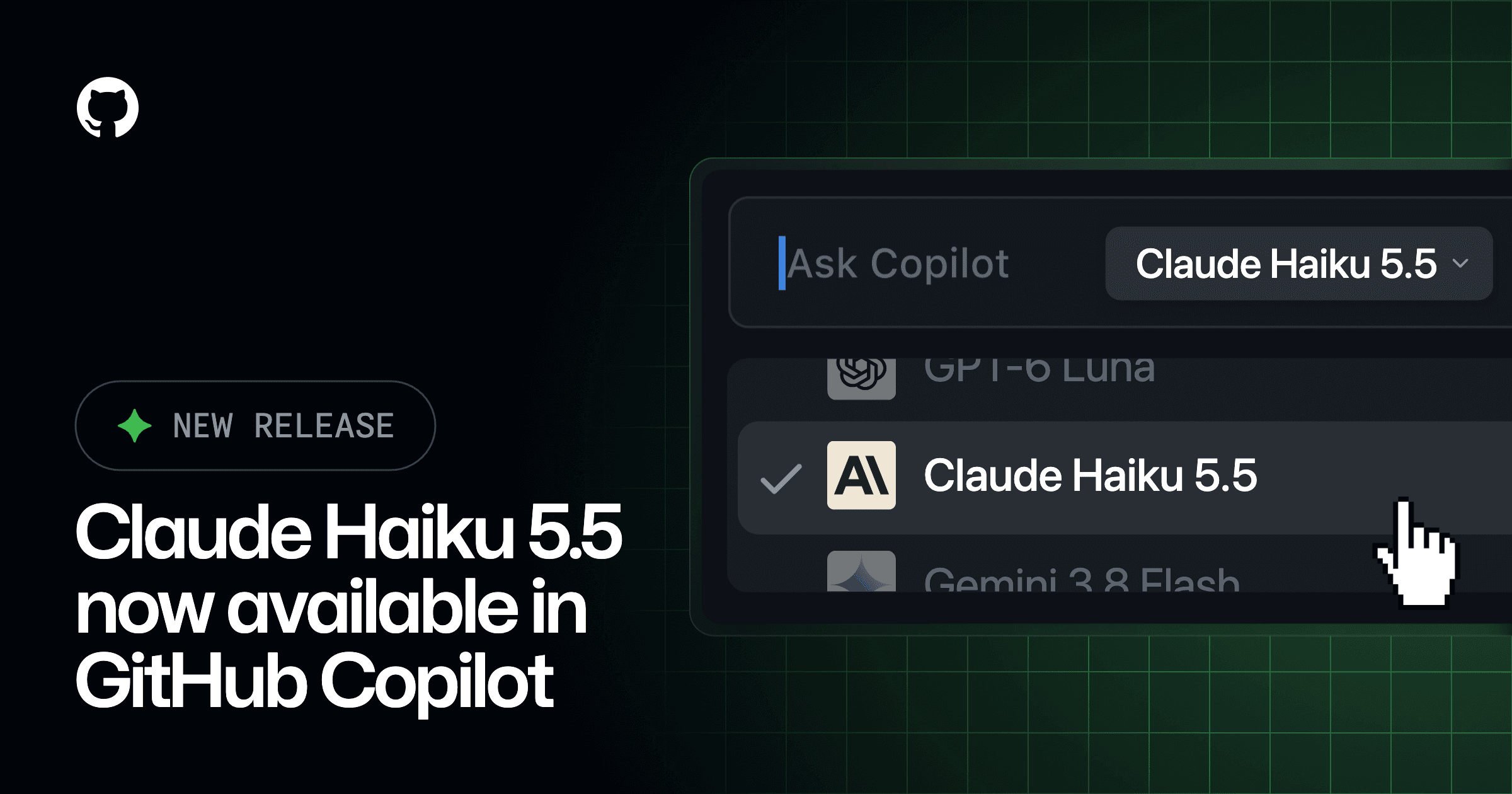
Claude Haiku 5.5 in GitHub Copilot
Claude Haiku 5.5, Anthropic's lightweight model, is now generally available in GitHub Copilot. It is designed for fast, high-volume work such as subagents, quick edits, and terminal tasks, according to The GitHub Blog.
OfficialGitHub
Local sandboxing for GitHub Copilot now generally available
GitHub Copilot's local sandboxing feature is now generally available across GitHub Copilot CLI, the GitHub Copilot app, and VS Code sessions using Agent Host. Local sandboxes give developers a secure environment.
OfficialGitHub
Discover local models in GitHub Copilot CLI
GitHub Copilot CLI now makes it easier to choose a local model without leaving your existing workflow. Starting in CLI version 1.0.94-0, users can use the /model command to discover supported models from a running instance.

VideoAlex Sprogis
T3 Code: FINALLY a control center for ALL your coding agents (Open Source!)
T3 Code is a free, open-source 'agent harness control service'—a control center for coding agents—created by developer Theo Brown. Available as a desktop, web, and mobile app, it unifies multiple coding agents and models (Claude Code, Codex, Cursor, Grok, Antigravity, Open Code, and GitHub Copilot) into one interface, letting users switch between agents mid-conversation and manage parallel sessions. It runs on the official Claude Code CLI, so it can be used with existing subscriptions. The app auto-detects subscriptions, supports Git, GitLab, and Azure DevOps, and offers features like diffs, an integrated browser, and pull request management. It runs with full access by default but can be switched to auto mode to block destructive commands.